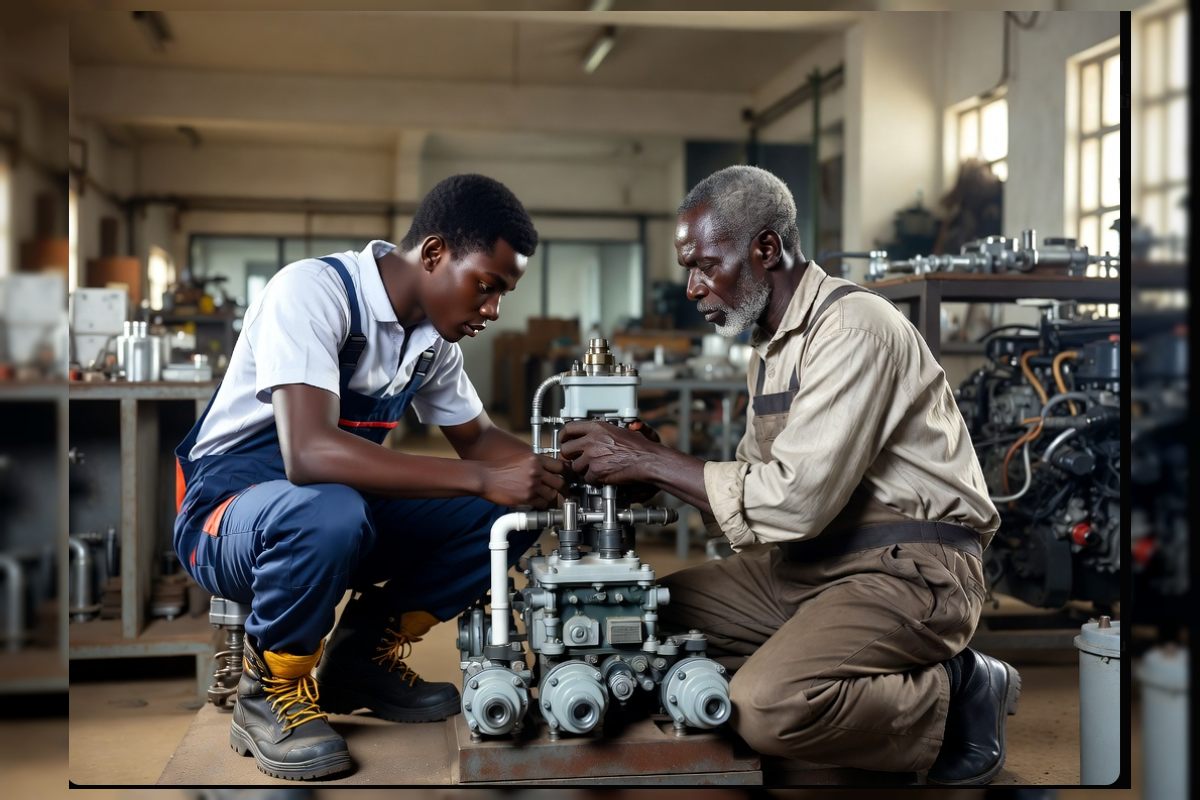

The transition from academic theory to professional practice is the most significant hurdle for young engineers in Nigeria. While universities provide the essential foundational knowledge required for design, material analysis, and theoretical physics, local workshops such as those found across industrial zones in Benin City provide the "tacit knowledge" that only comes from years of hands-on work. Integrating university engineering interns into these practical workshops is not merely a mentorship exercise; it is a critical, long-term strategy for building a technically proficient and resilient national workforce.
The Critical Value Exchange
At its core, the integration of students into professional workshop environments represents a powerful two-way value exchange. The intern enters the space bringing current theoretical frameworks, advanced digital literacy, and fresh, uninhibited perspectives on problem-solving. They are often comfortable with the latest simulation software and international design standards. The workshop master, in contrast, provides experiential wisdom the intuitive ability to diagnose engine failure by sound alone, the deep-seated knowledge of material integrity under local climate conditions, and the creative agility to innovate when faced with limited resources.
When an apprentice works side-by-side with a master craftsman, they move beyond the "how" of a textbook and begin to understand the "why" of the workshop. They learn to interpret complex blueprints in the context of physical reality, identifying where a perfect academic design might face failure due to environmental, structural, or material variables that were not accounted for in a classroom setting.
Practical Implementation Strategies for Workshop Owners
To successfully integrate interns, workshop managers must move away from the outdated "observation-only" model. If the goal is to produce skilled engineers, the internship must be viewed as an active training program. Workshop owners should consider adopting the following structured engagement paths:
- Task-Oriented Mentorship: Rather than having interns fetch tools, assign them specific, measurable modules. This could include performing a complete diagnostic teardown of a water heating system or mapping the connectivity of premium kitchen fixtures.
- Reverse Mentoring: Encourage interns to share new industry standards, safety software, or emerging trends with the workshop team. This ensures that traditional, well-established shops stay updated with global technological shifts without losing their foundational expertise.
- Documentary Reflection: Require interns to maintain a technical journal that bridges the gap between their daily site tasks and their university curriculum. This forces them to critically reflect on how classroom theory such as fluid dynamics or thermal conductivity translates to the performance of the rubber pipes and heaters they are installing.
The Role of Environment and Infrastructure
The mentorship cycle relies heavily on the physical environment. A shop that is organized where tools are meticulously cataloged and parts are managed systematically teaches the intern about professional standards, safety, and operational efficiency. Proper infrastructure creates a safe space for controlled experimentation, where a mistake or failure in the shop becomes a valuable learning opportunity rather than a project disaster.
The success of these programs is often visible in the quality of the final work output. When an intern learns to handle premium kitchen and bathroom fixtures or understands the intricacies of sophisticated plumbing and electrical fittings, they are absorbing the importance of precision, consistency, and reliability. This is the difference between a technician who simply "completes a job" and an engineer who "delivers a solution.
Building a Sustainable Talent Pipeline
For this integration to be sustainable, it must be treated as a strategic business investment rather than a social favor. Local enterprises that foster internship programs often find themselves with a pipeline of future employees who are already acclimated to their specific workflows, safety protocols, and quality standards. It creates a "trusted partner" network, where the workshop becomes a nexus of talent development, effectively vetting future employees before they even graduate.
Furthermore, this synergy is crucial for modernizing local trade. As the construction and engineering sectors in Nigeria continue to demand higher levels of technical competence and professional accountability, the integration of students into the real-world workshop environment will define the next generation of our industrial capacity.
Conclusion: The Future of Nigerian Engineering
By grounding their academic studies in the practical realities of a functioning workshop, we ensure that our future engineers are not just degree holders, but skilled architects of our nation’s industrial future. As the industry shifts toward higher standards of performance and quality, the collaboration between academic institutions and local workshops becomes the most effective bridge to excellence.
For those interested in seeing these standards in action, platforms that curate high-quality materials and professional-grade fixtures like Onah Global demonstrate the exact level of performance expected in modern projects. Integrating interns into this world of precision is the fastest way to elevate our national engineering standards. By fostering these environments today, we guarantee that the projects of tomorrow are built to last, perform under pressure, and drive our economy toward a more efficient and innovative future.

Comments (0)
No comments yet. Be the first!
Please login to leave a comment
Login to Comment